
 HIPROBOT

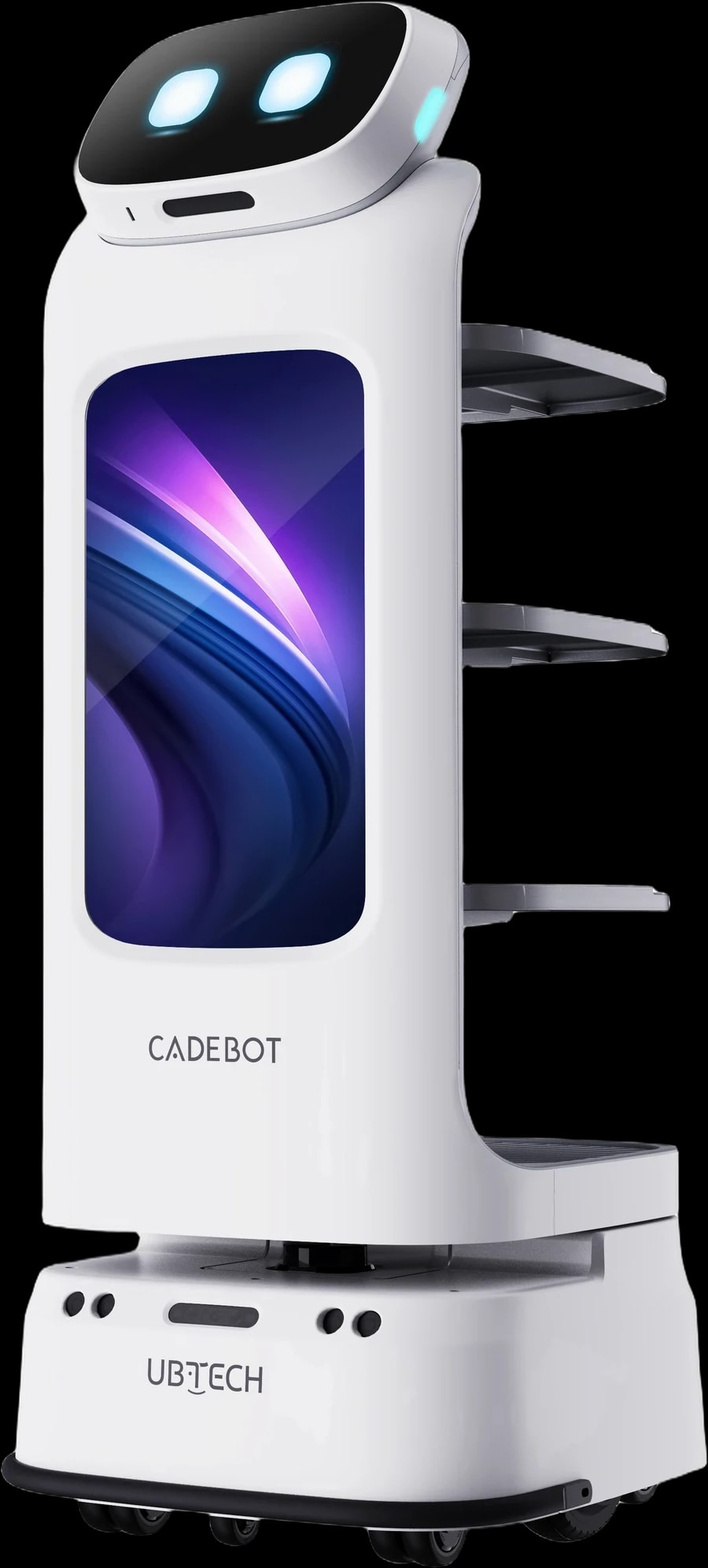
CADEBOT
UBTECH CadeBot-L100
Technical data
- Height
- 1265 mm
- Weight
- 55 kg
- Payload
- 4 × 10 kg
- Speed
- 0,3–1 m/s
- Runtime
- 8 h
UBTECH CadeBot-L100
About this model
A delivery robot for restaurants, retail and hotels: an open tray design, a high-definition advertising display and lifelike guest interaction.
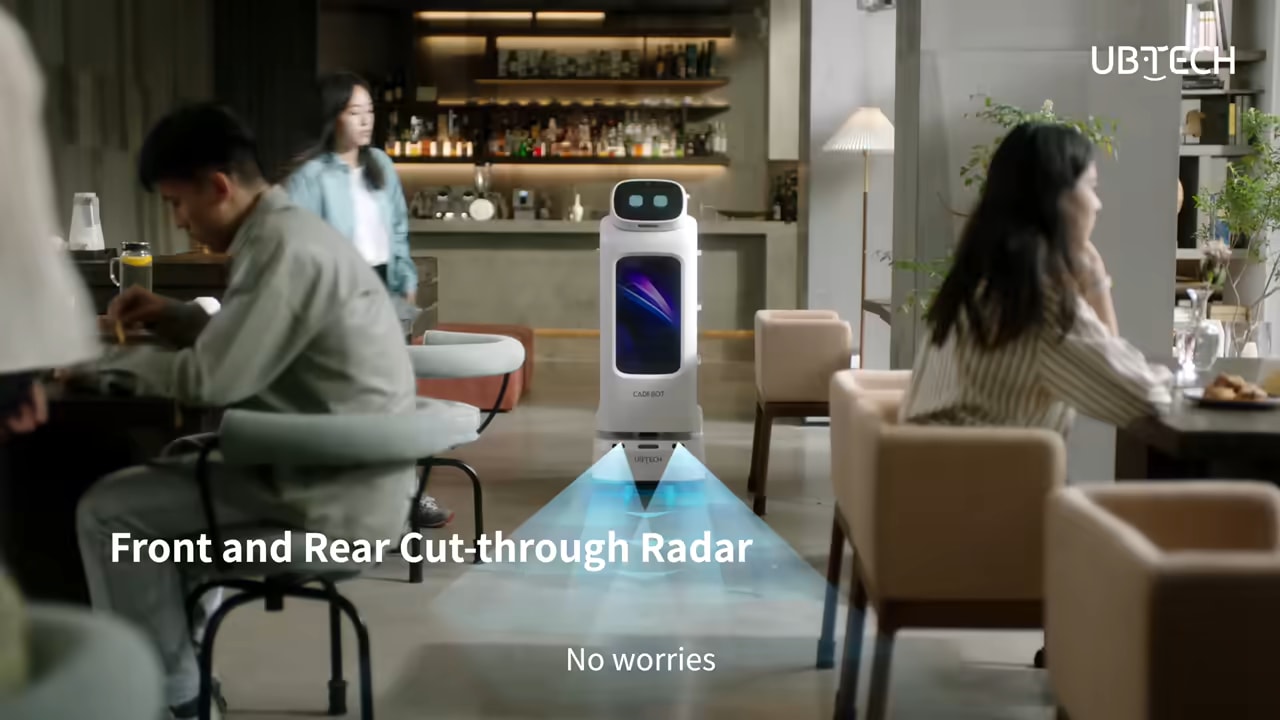
Delivery on the restaurant floor
U-SLAM fusion positioning handles the route, using laser SLAM with ceiling QR codes as a supplement, while front-to-back radar (202° forward, 55° rearward), RGBD depth cameras and ultrasonic sensors handle safety. It passes through a 65 cm lane, the four trays carry up to 40 kg, and infrared sensors detect when a guest lifts a dish off the tray.
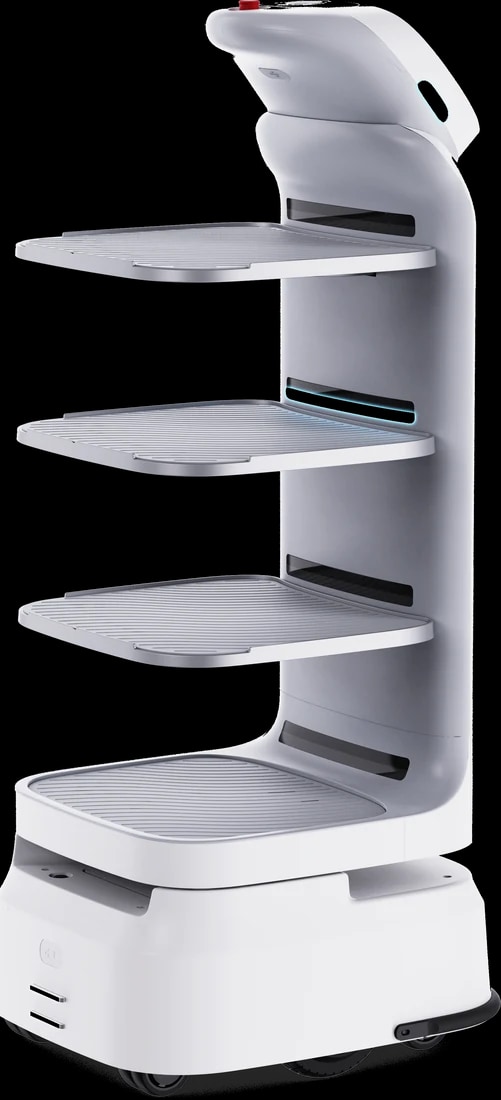
270° open trays
An open design with 270° access makes placing and retrieving easy. The load-bearing L-shape carries up to 40 kg, and built-in infrared sensors detect whether a guest has already lifted the dish; a lit tray reduces the chance of an error.
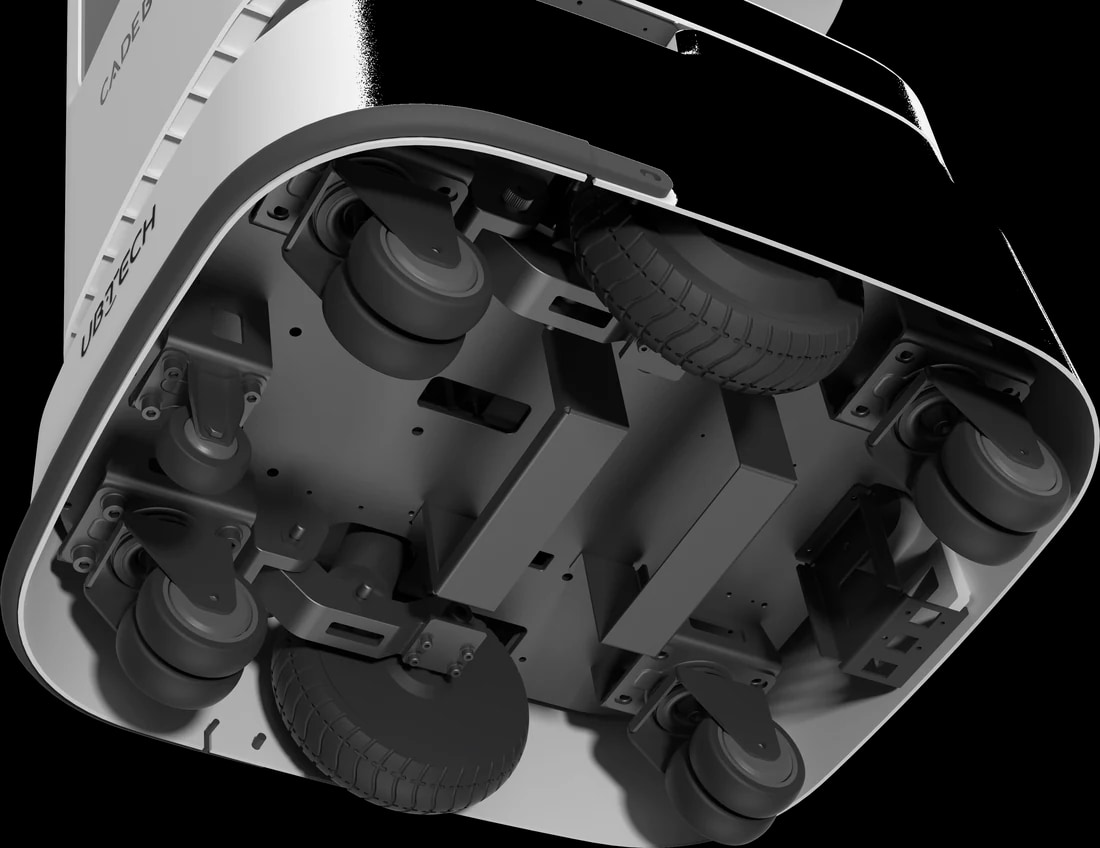
U-STABLE chassis
Automotive-grade independent suspension, all-terrain wheels and shock absorber wheels keep the ride steady, and independent obstacle-crossing wheels improve what it can get over. An electronic bumper strip reacts the moment it touches an obstacle.
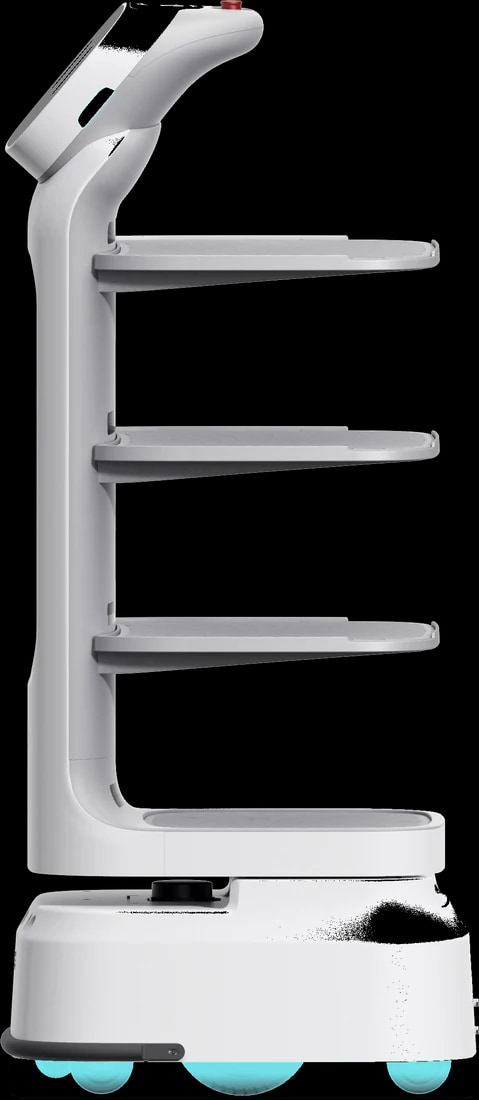
L-shape and materials
The body is made of automotive-grade Q345 alloy steel and the trays of high-quality ADC12 aluminium alloy die-casting. The structure is detachable, so the robot adapts to different spaces.
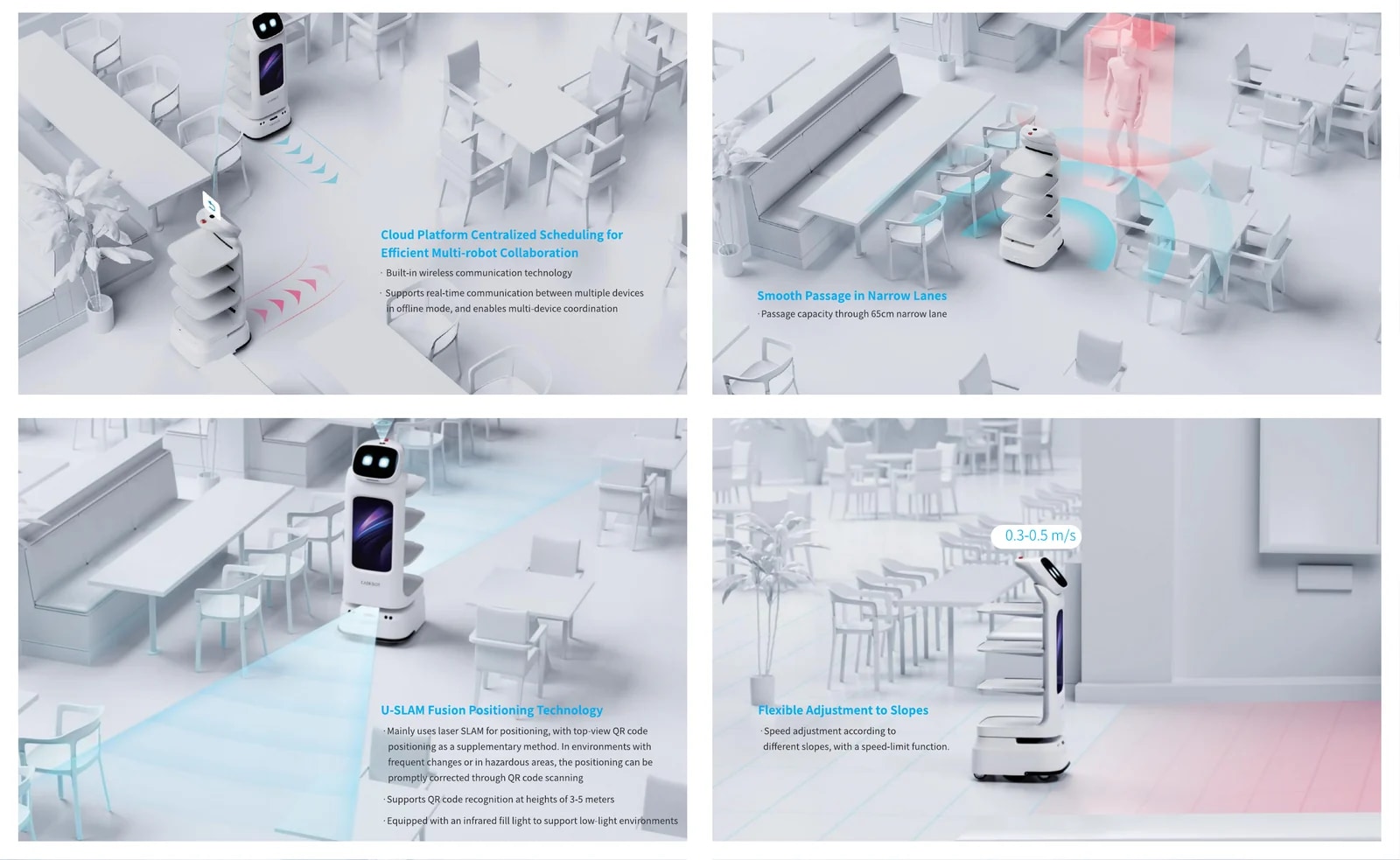
Getting around a room
U-SLAM fusion positioning with laser SLAM and ceiling QR codes at 3-5 m, passage through a 65 cm lane, speed adjustment on slopes, and cloud scheduling for several robots that coordinate even offline.
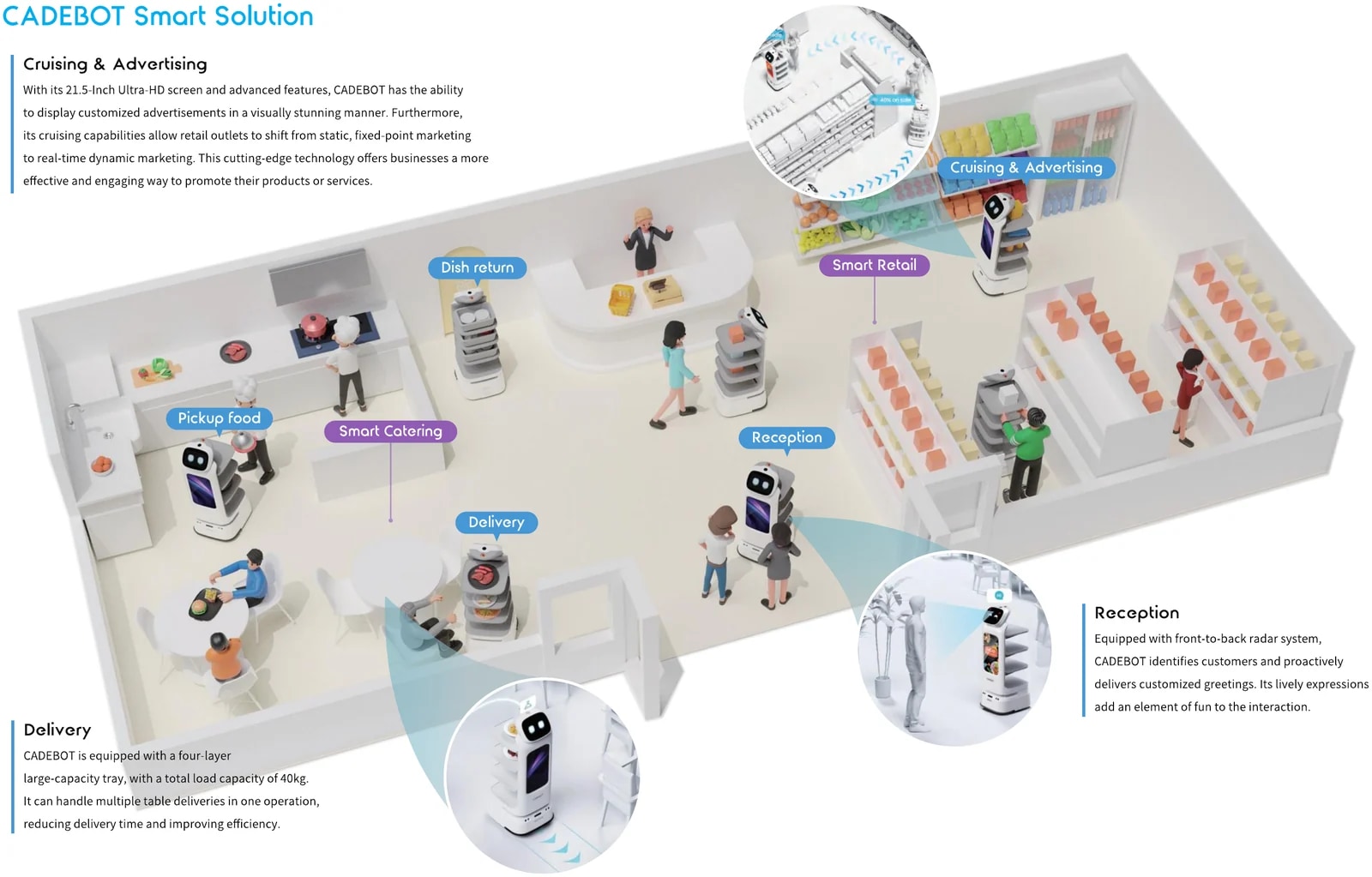
How it fits into a venue
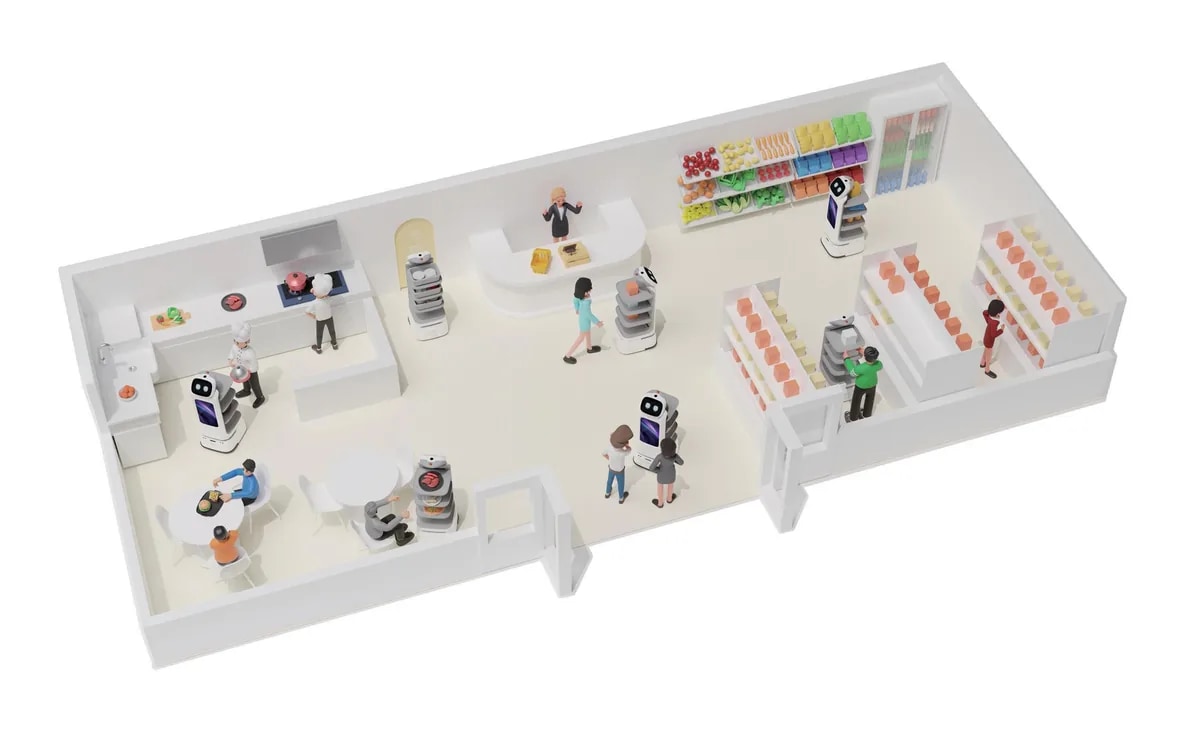
The manufacturer’s floor plan: the robot cruises and advertises, collects an order at the pickup point, delivers to the table and clears the dishes, and takes reception duty at the entrance. All of it on the same route, with no special infrastructure in the room.
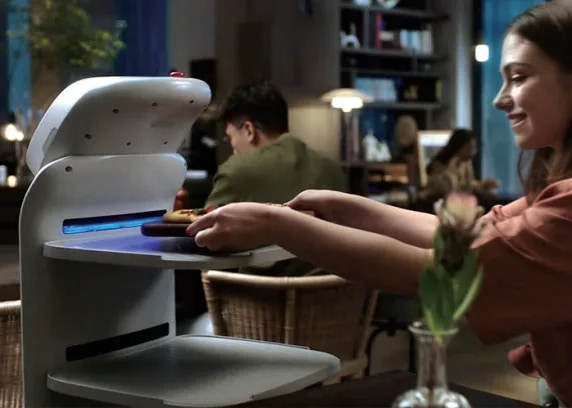
Taking a dish off the tray
Infrared sensors in the tray detect the pick-up, and a lit tray shows the guest which one is theirs. Each tray carries up to 10 kg.
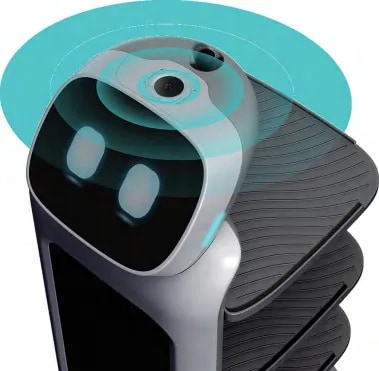
Sensing in the head
The head holds an RGBD depth camera for object and cliff detection, alongside laser radar and ultrasonic sensors.
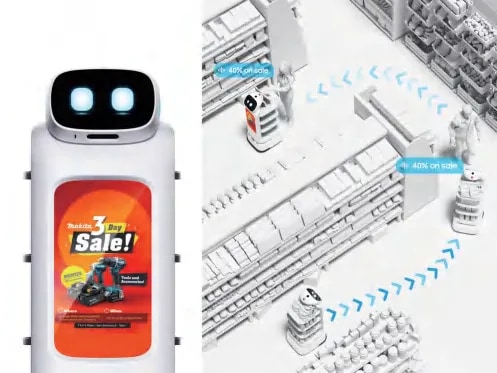
Advertising display
The display is 21.5 inches (1920x1080). Adverts can be imported from a USB stick or managed from the cloud.
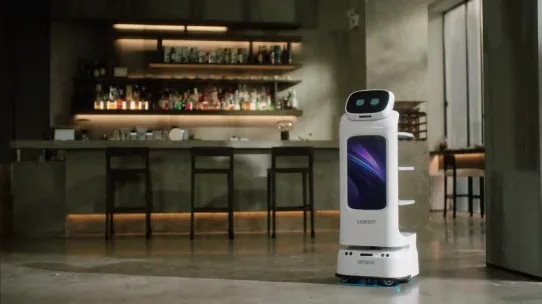
Speed for the room
Speed is adjustable between 0.3 and 1 m/s, so it can be matched to how busy the room is.
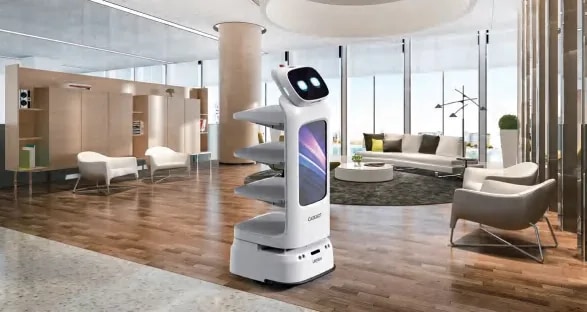
Body and dimensions
The body is automotive-grade Q345 steel; the robot weighs 55 kg and measures 484x558x1265 mm.
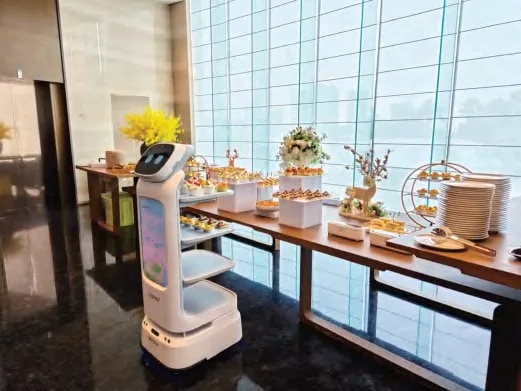
Four trays
Four trays carry up to 40 kg in total, each with an area of 38x42 cm.
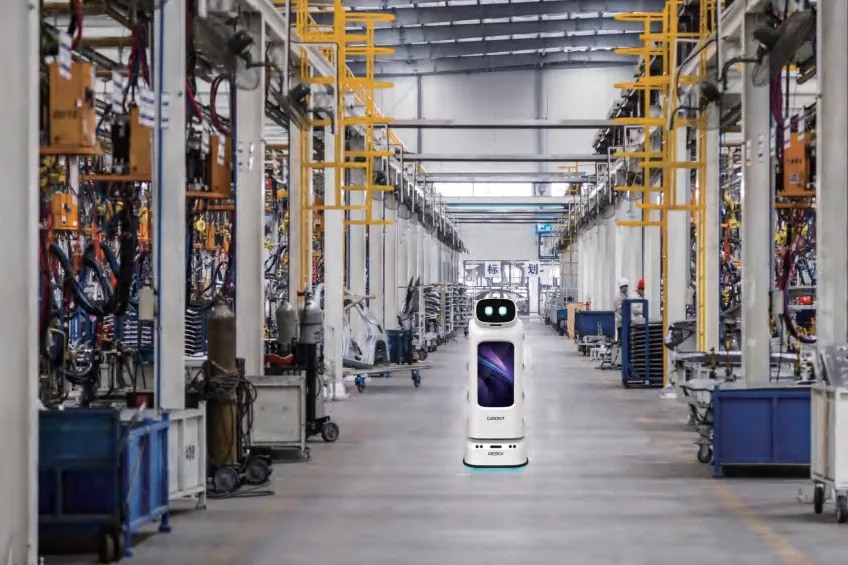
Uneven floors
It crosses obstacles up to 15 mm and slopes up to 5°, which covers a production hall floor.
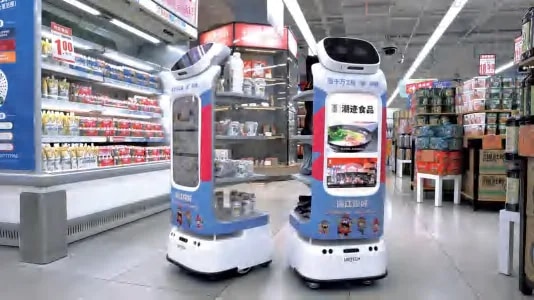
Several robots together
Several robots coordinate through cloud scheduling and keep working offline.
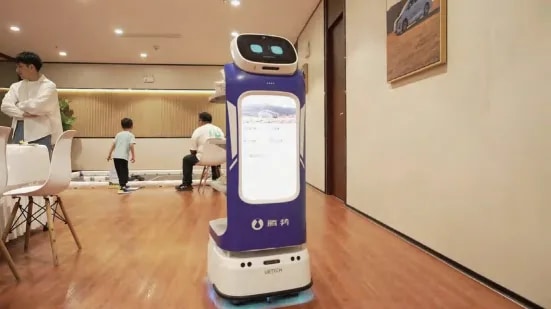
Runtime and charging
One battery lasts 8 hours working or 12 on standby; charging takes 4 hours.
Finding its way
The route comes from U-SLAM fusion positioning, with ceiling QR codes at 3-5 m correcting it where the room changes often.