
 HIPROBOT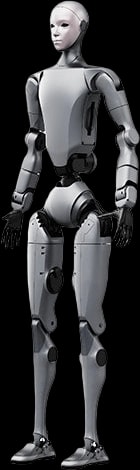
H2
Unitree
Technical data
- Height
- 182 cm
- Weight
- ~70 kg
- Payload
- ~7 kg (roka)
- Degrees of freedom
- 31
- Joint torque
- do 360 N·m
- Runtime
- ~3 h
Unitree H2
About this model
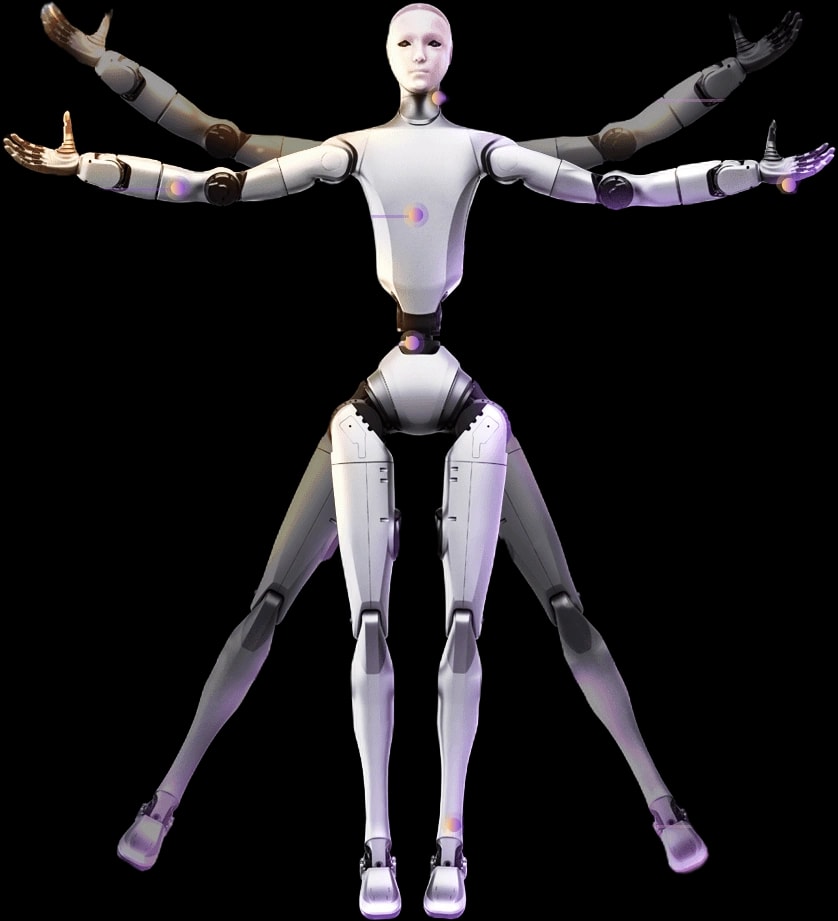
The Unitree H2 is a human-scale humanoid: 1820 × 456 × 218 mm and about 70 kg with battery. It has 31 degrees of freedom: 6 per leg, 7 per arm, 3 at the waist, 2 in the head; the leg (shank + thigh) measures 1045 mm, the arm (forearm + upper arm) 690 mm.
Its motors are low-inertia internal-rotor PMSMs; a leg joint gives up to 360 N·m and an arm joint 120 N·m, the arm holding about 7 kg rated and 15 kg peak. The 15 Ah (0.972 kWh) lithium battery at up to 75.6 V gives about 3 hours. Onboard compute reaches 2070 TOPS (Jetson AGX Thor), a wide-field binocular camera and the bionic face are standard; dexterous hands are optional.
Motion algorithms update over the air; the builds are H2 and H2 EDU. The films and photographs are the manufacturer's own.
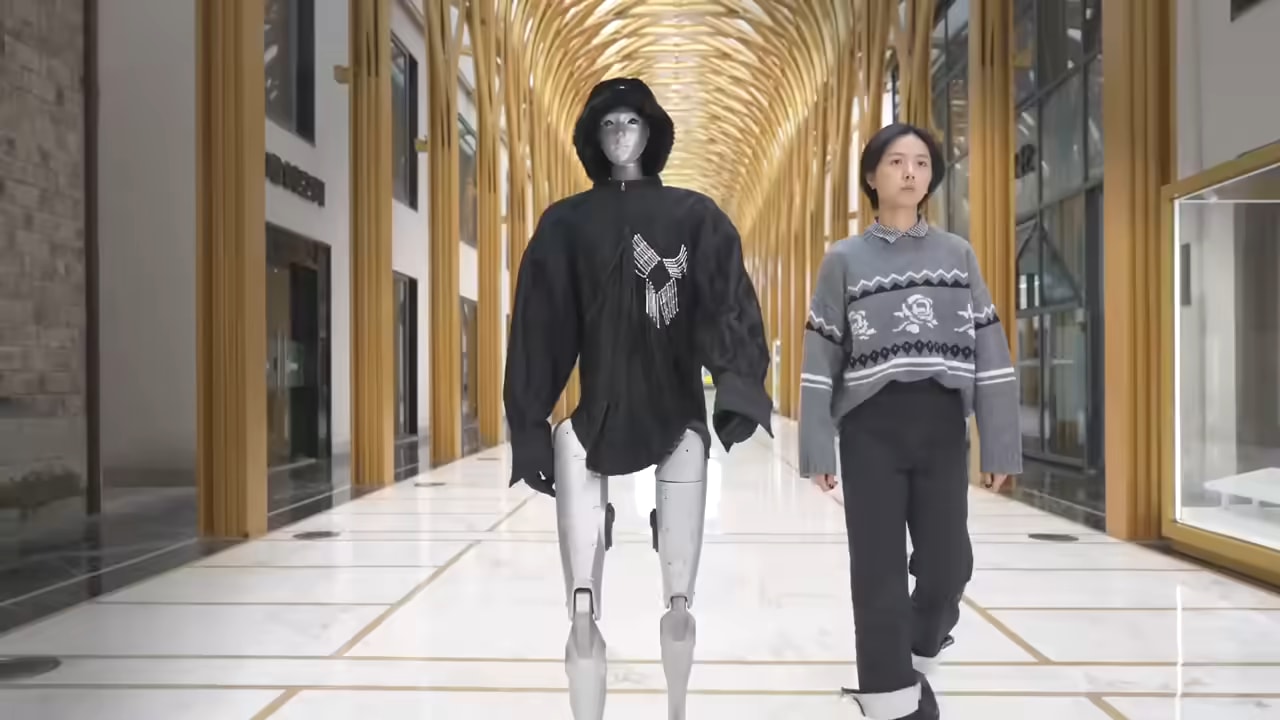
Walking beside a person
A relaxed walk down a hall beside a person, a stride in human rhythm, not robotic. A six-degree leg of 1045 mm gives a step a person keeps up with naturally, without adjusting. Walking dressed shows how human the joint layout is: the clothes fall as they would on a person.
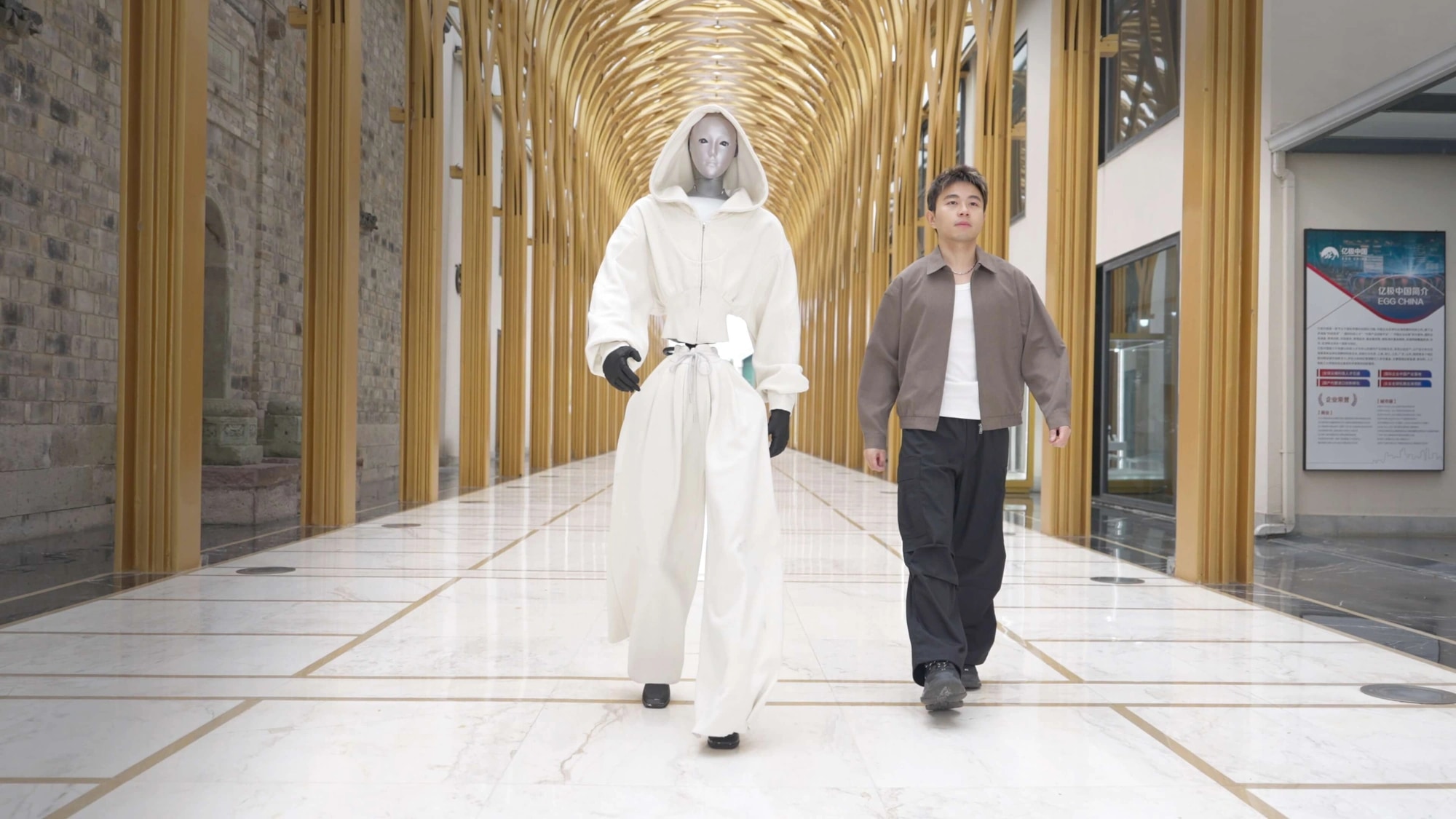
A stride at human scale
At 182 cm and about 70 kg the H2 is built for spaces made for people: doors, halls and workstations. The 1045 mm leg gives a stride a person naturally keeps up with; the 690 mm arm at about 7 kg rated (15 kg peak) handles shelf and table reaches. The standard wide-field binocular camera covers the space ahead; dexterous hands are optional.
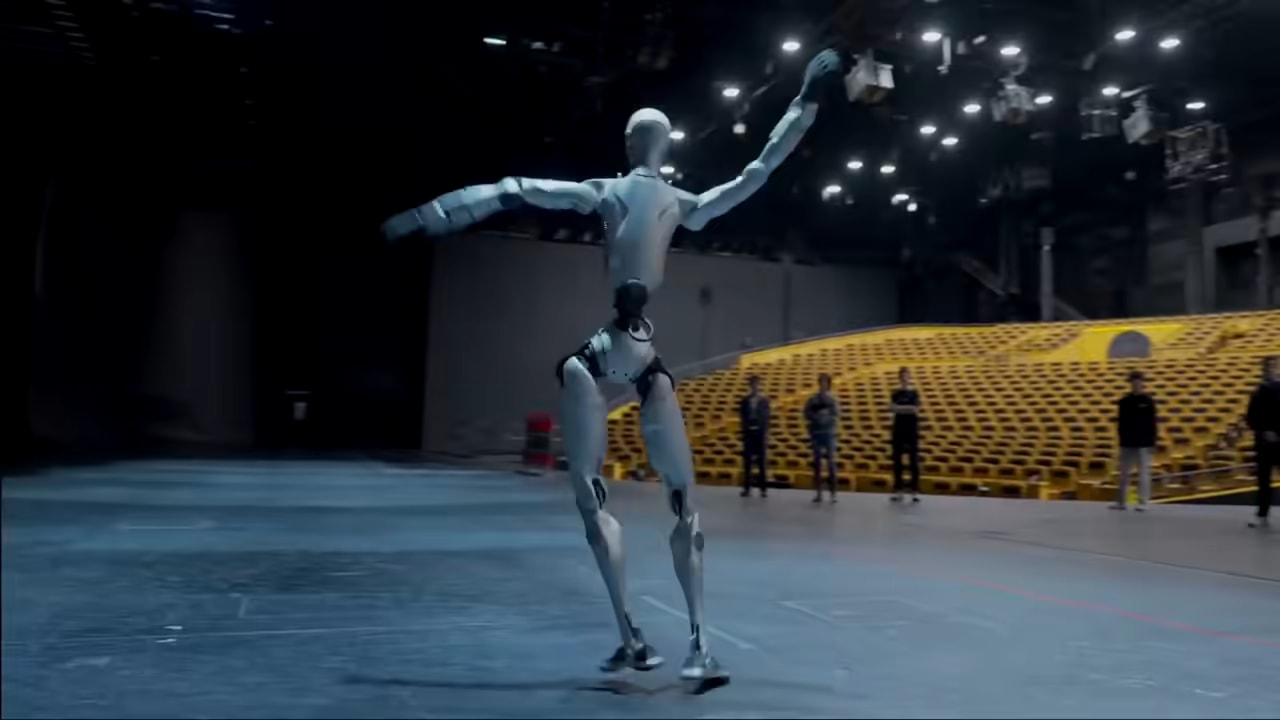
Choreography on stage
Stage choreography: fast, fluid motion across all 31 degrees of freedom at once. Seven-degree arms and a three-degree waist allow swings and turns a rigid torso could not, and joints of up to 360 N·m carry them without losing balance. What reads as dance on stage is in fact a test of precise motion reproduction.
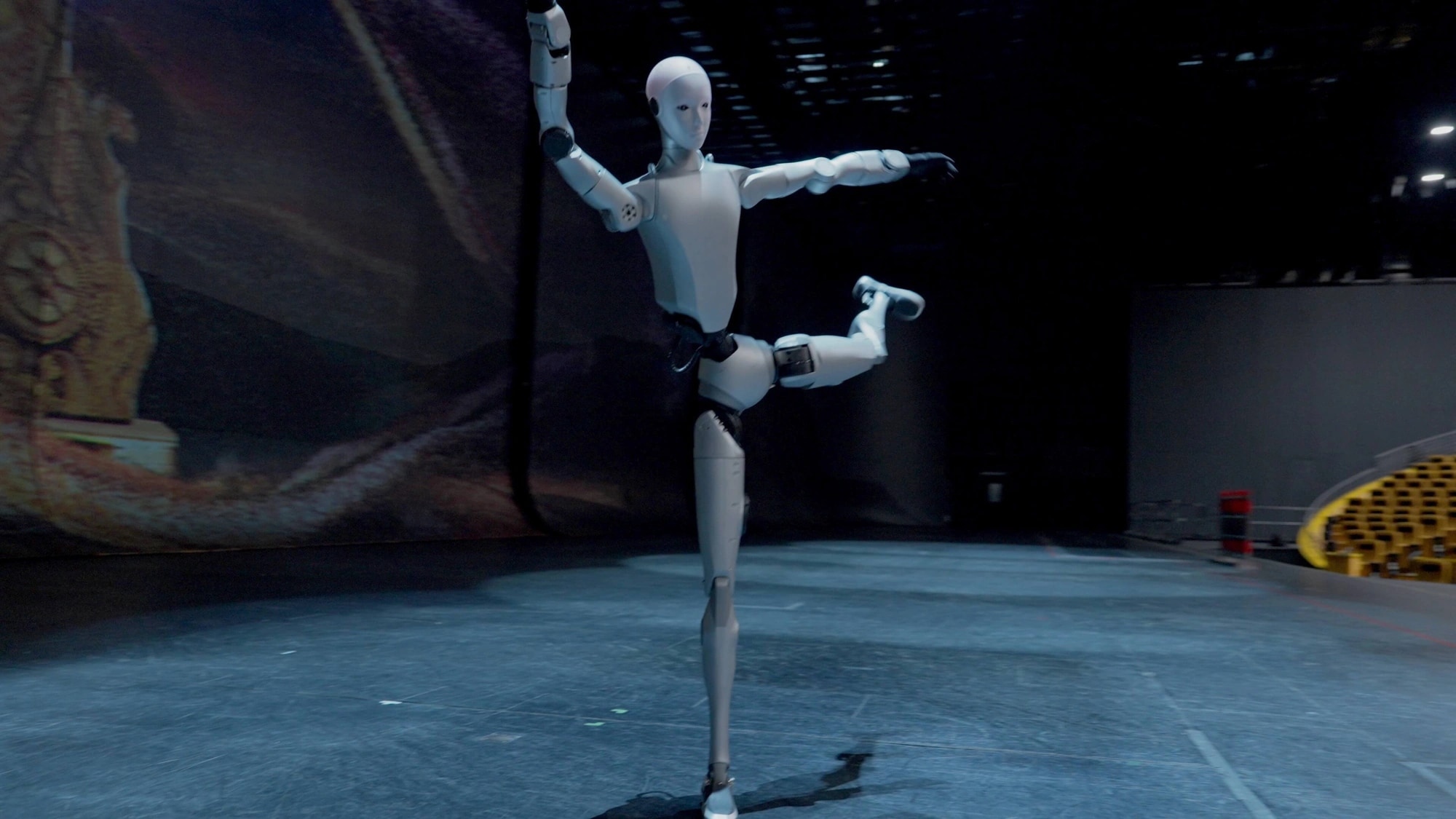
31 joints in motion
Seven degrees of freedom per arm, six per leg, up to 360 N·m in the leg and 120 N·m in the arm. Low-inertia internal-rotor motors give fast response and better cooling, and the lithium battery (0.972 kWh, up to 75.6 V) about 3 hours. The EDU build is open for embodied-model development, the manufacturer aims it at co-development with researchers.
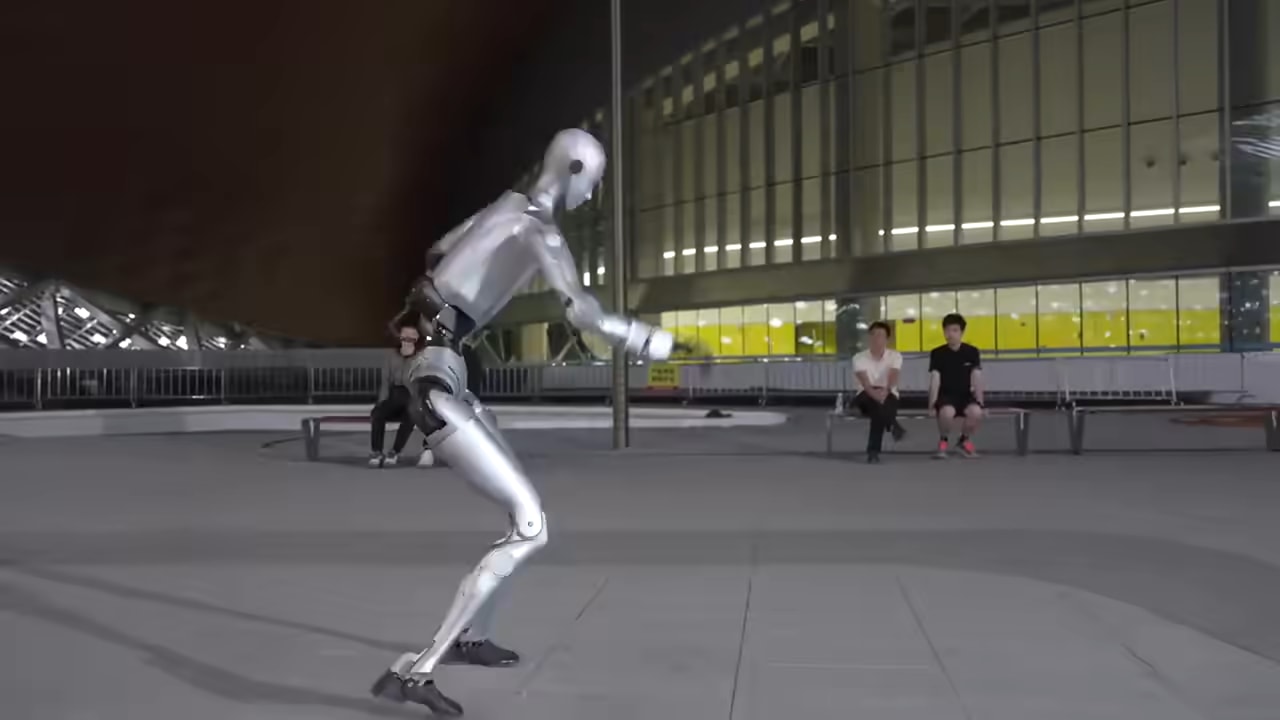
Dynamics on the plaza
Turns and single-leg balance outdoors, dynamic stability outside the lab. Motion algorithms update over the air, so the same hardware gains new moves over time. Up to 2070 TOPS of compute runs perception and balance live with headroom left for user-built tasks.