
 HIPROBOT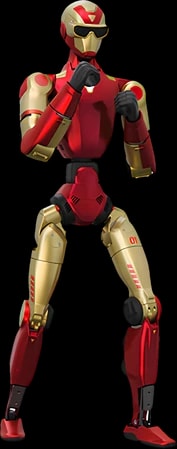
Technical data
- Height
- 123 cm
- Weight
- ~27–29 kg
- Degrees of freedom
- 20–26
- Runtime
- ~1 h
Unitree R1
About this model
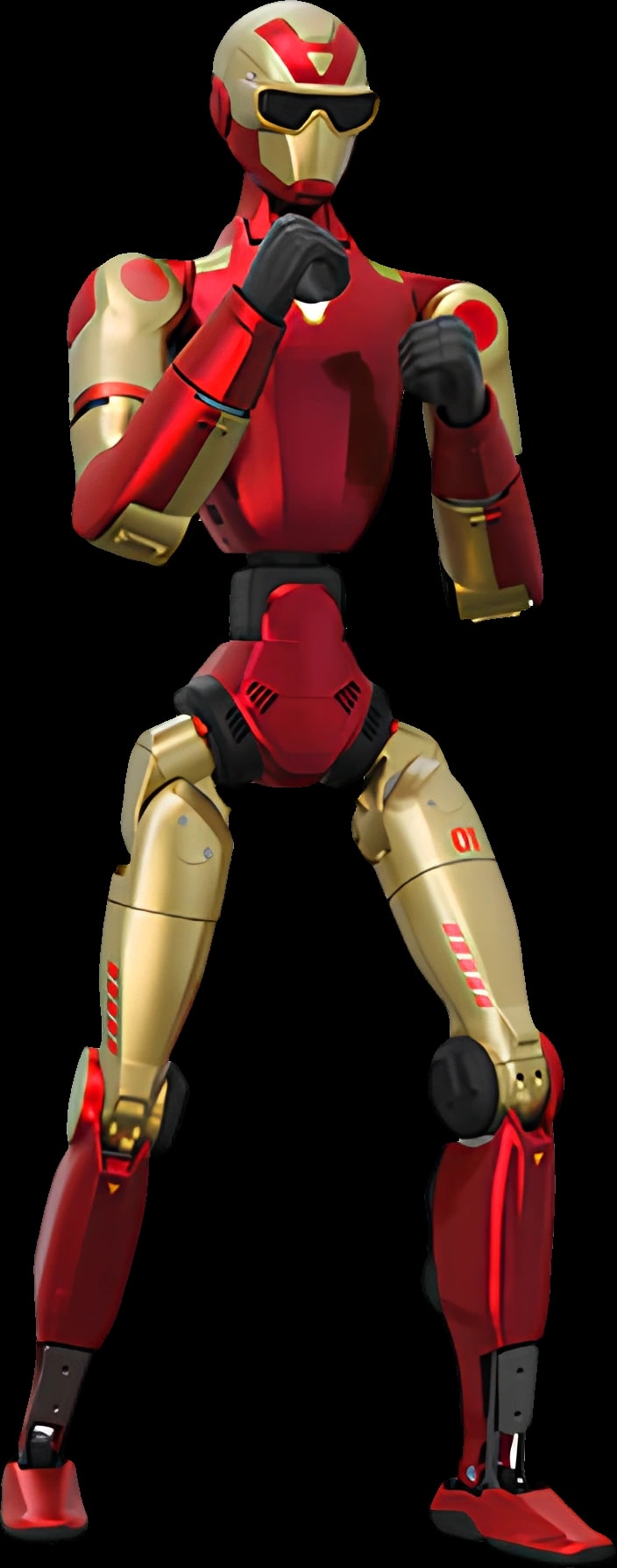
The Unitree R1 is the lightweight humanoid for development and research: 1230 × 357 × 190 mm and roughly 27-29 kg with battery, two people lift it. The base R1 Air has 20 joints (6 per leg, 4 per arm), the R1 26 (5-joint arms, 2-joint waist, 2-joint head), and the R1 EDU up to 40 with the optional dexterous hands.
The leg (shank + thigh) measures 600 mm, the arm (forearm + upper arm) 420 mm; the knee runs −10° to 139°, the hip ±157° / −168°-146° / −60°-100°, the waist ±150° and ±30°. Hollow-axis joints route cabling internally, on crossed-roller bearings with air cooling.
Vision is a binocular camera on an 8-core processor with 10 TOPS; four microphones and two 3 W speakers give it voice interaction. The lithium battery lasts about an hour and swaps quickly. White and red are the factory colourways. The films and photographs are the manufacturer's own.
Acrobatics on the lawn
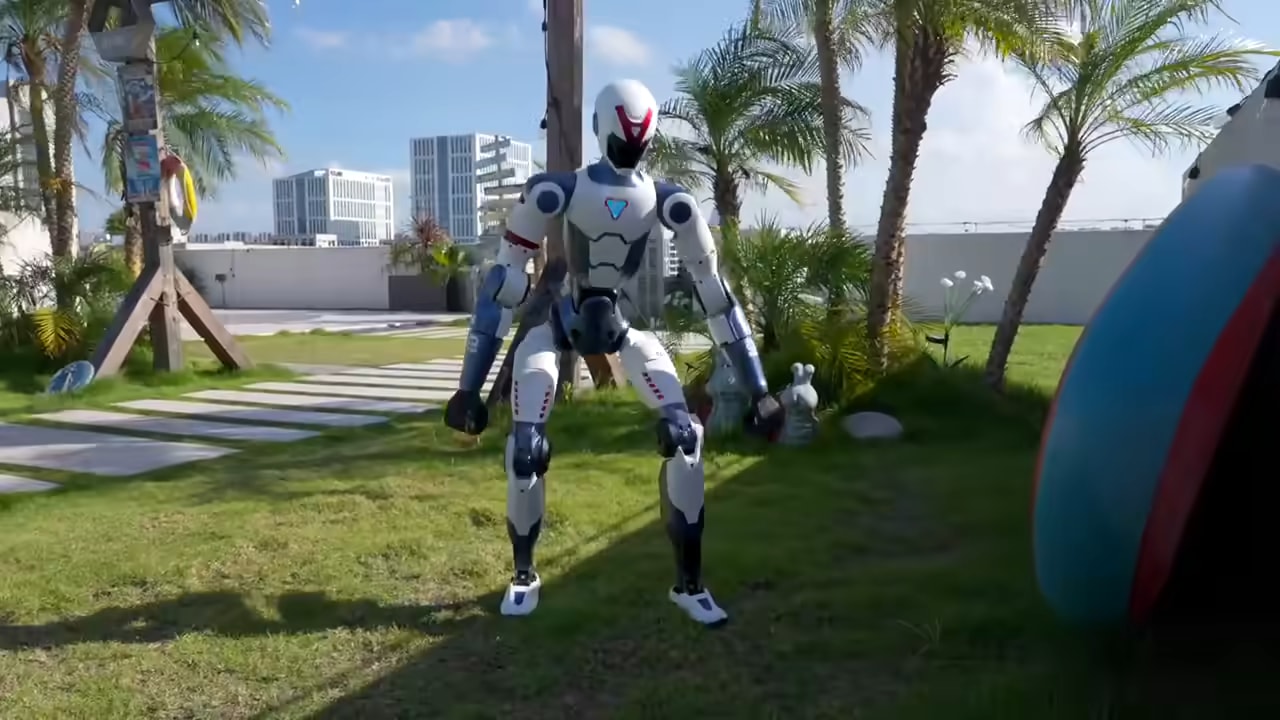
A kip-up straight to its feet and a cartwheel: fall recovery is a built-in ability of the light humanoid, not a stunt. At 27-29 kg a fall harms neither robot nor surroundings, and it picks itself up and continues. For research that means experiments run without a safety gantry or an assistant at every fall.
Light, therefore fast
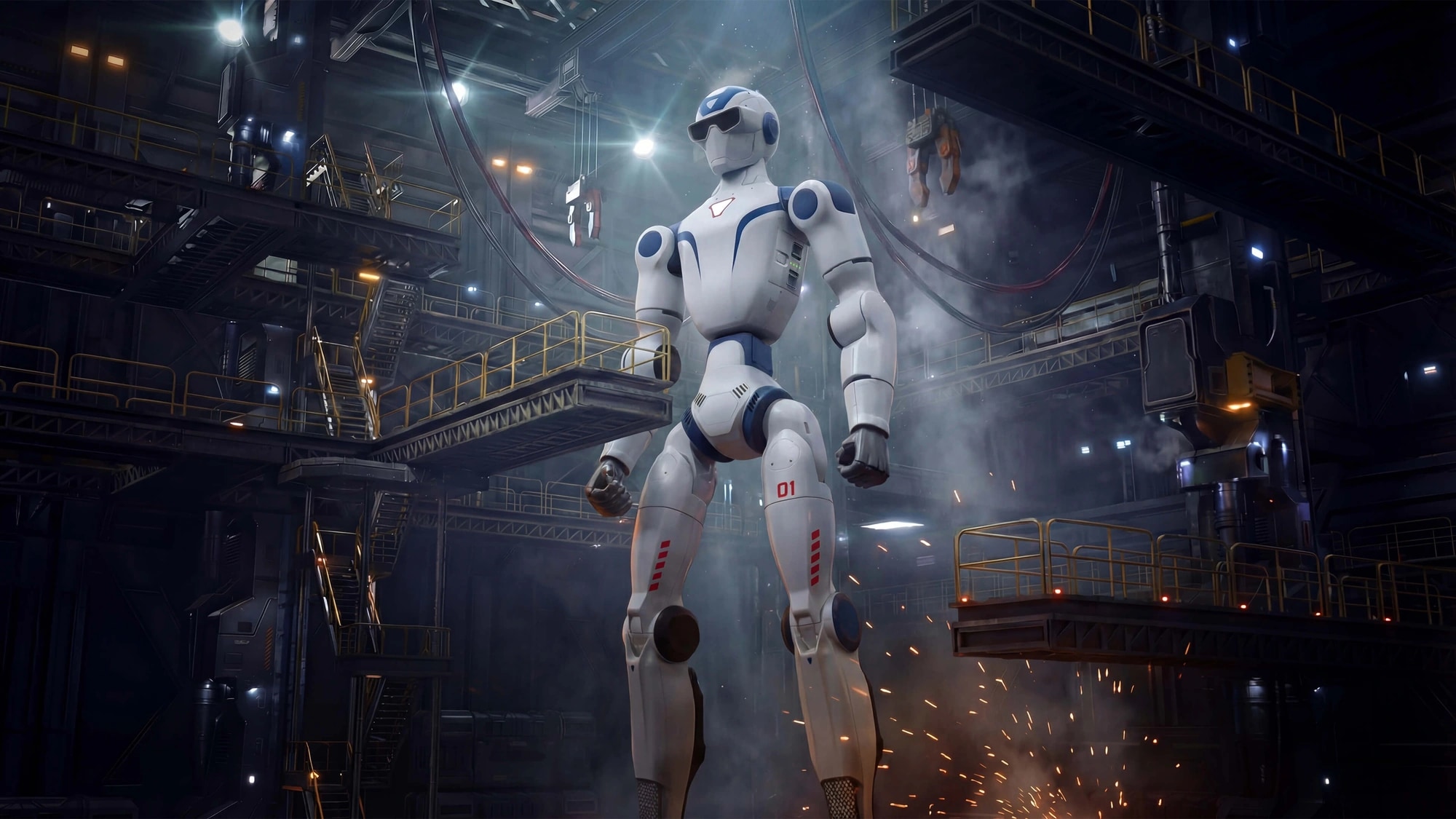
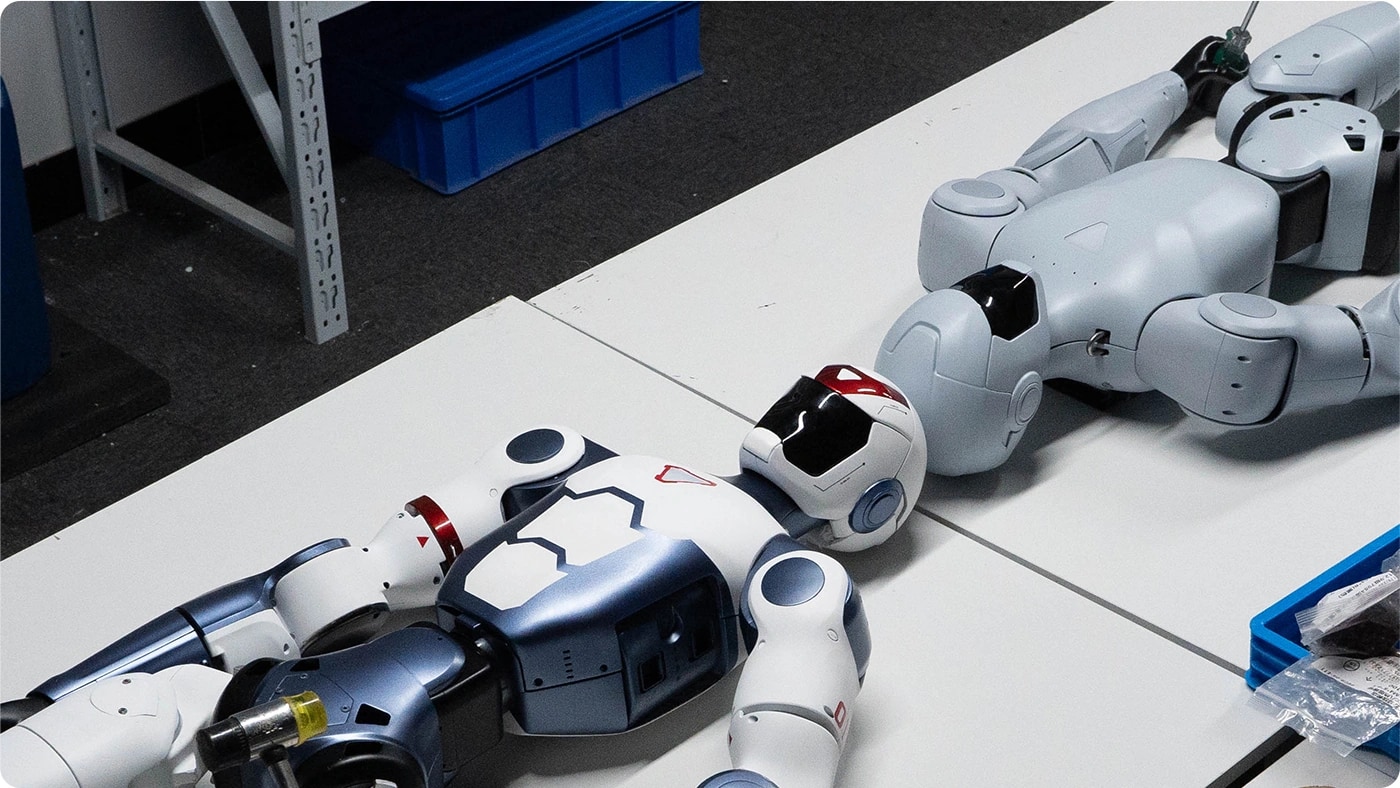
At 123 cm and roughly 27-29 kg two people lift it, which simplifies research work considerably. Hollow-axis joints route the cabling inside the body, so no external run is damaged by motion or a fall; the bearings are crossed-roller, the cooling local air. The battery swaps quickly and gives about an hour.
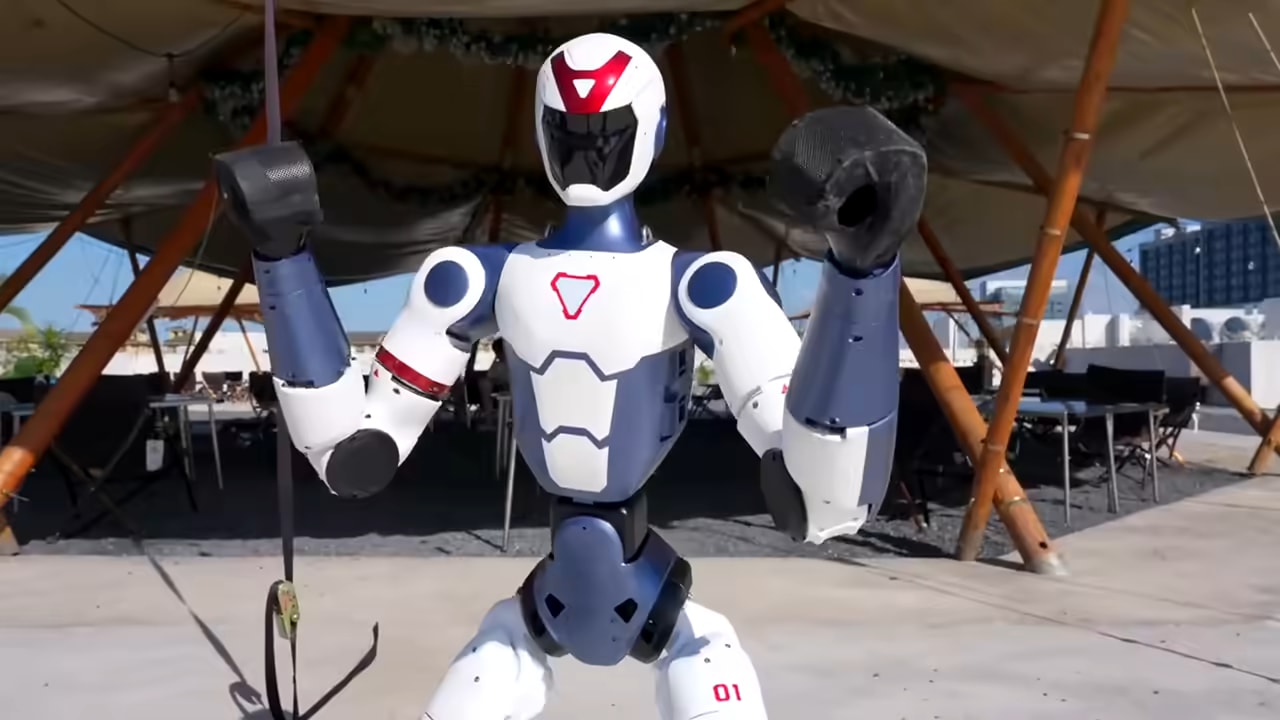
Boxing practice
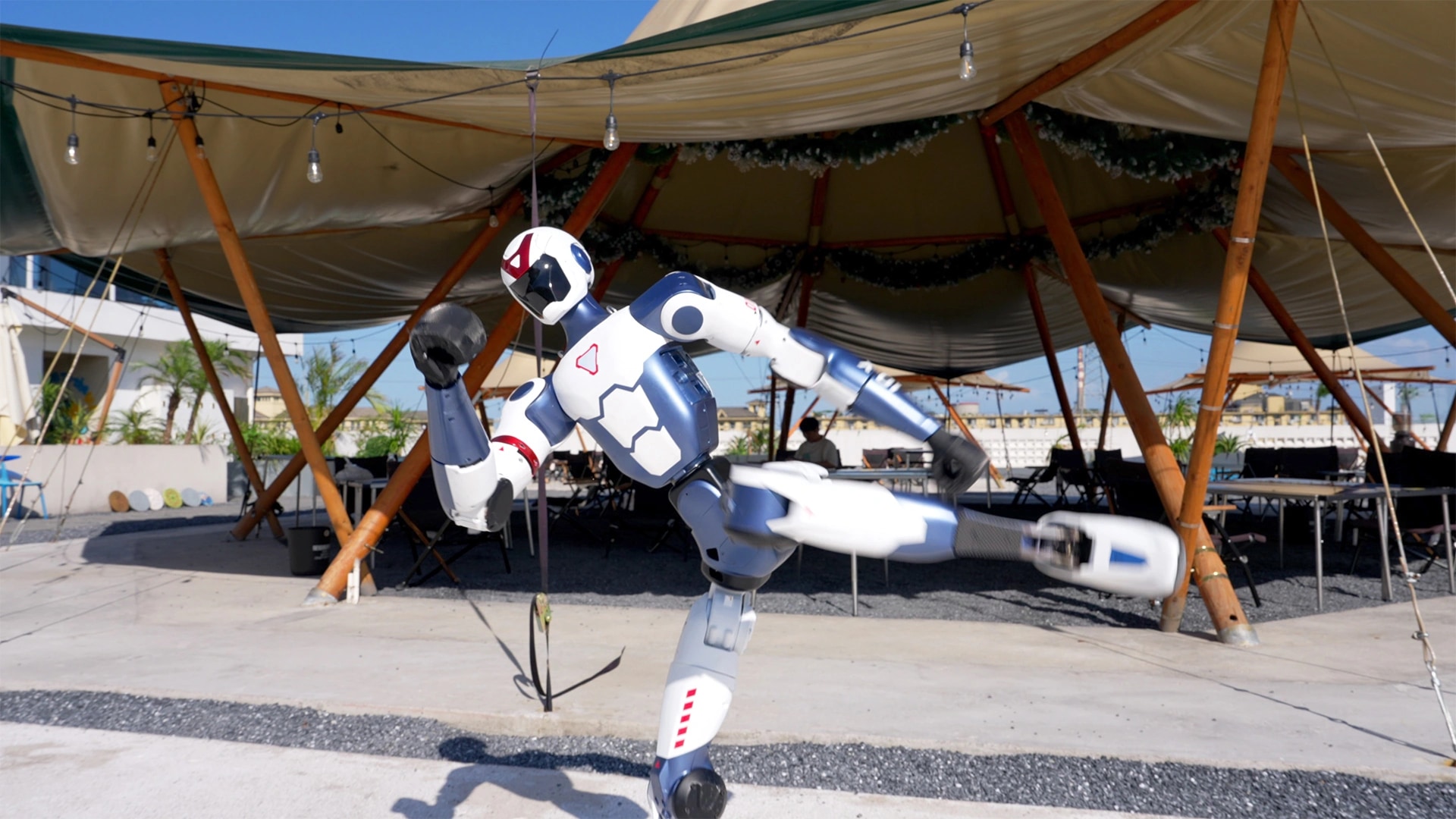
Punches from both arms on a stable stance, fast upper-body motion without losing balance. Four- or five-joint arms and a two-degree waist deliver impulses the controller levels out through the legs. Crossed-roller bearings and internally routed cables stand up to repeated dynamic motion.
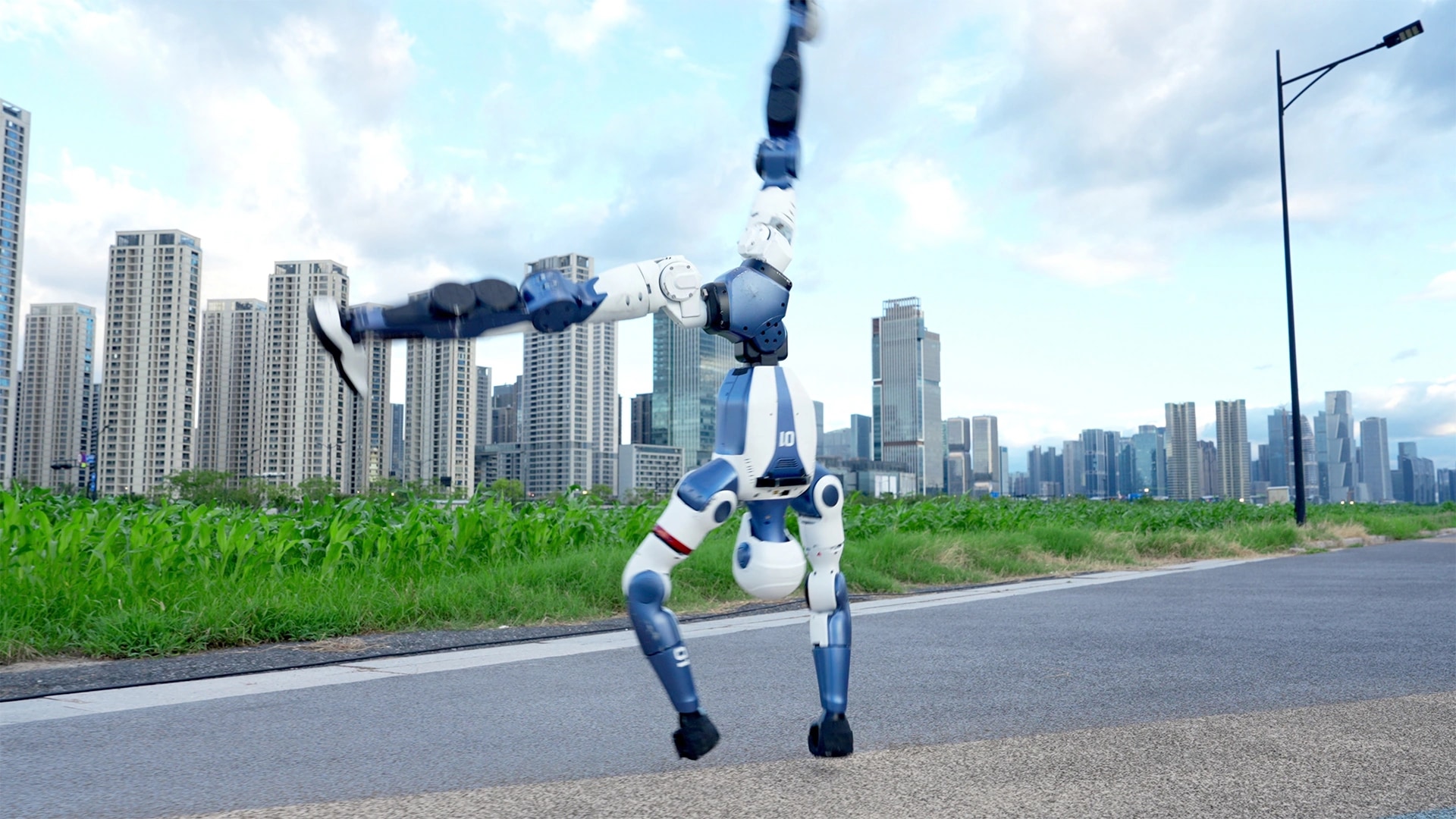
From 20 to 40 joints
The base R1 Air has 20 joints, the full R1 26: five-joint arms, a two-joint waist and head and the EDU build up to 40 with the optional dexterous hands. Vision runs on a binocular camera and an 8-core, 10 TOPS processor; four microphones and two speakers add voice interaction. White and red are the factory choices.
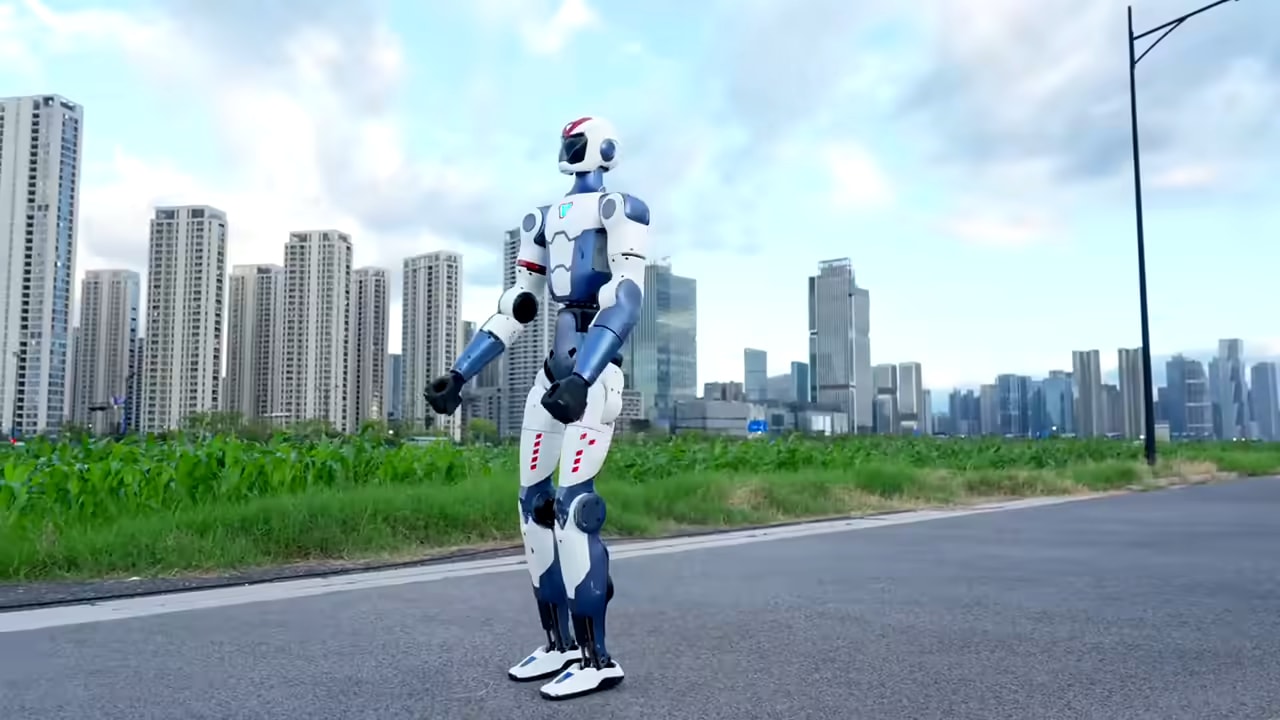
The handstand
Walking on its hands, attitude control that works upside down too. The same joints that carry walking take the legs’ role inverted, the controller steering the centre of mass exactly as when upright. The demo measures the generality of the algorithm: a move outside the library derives from the same balance model.
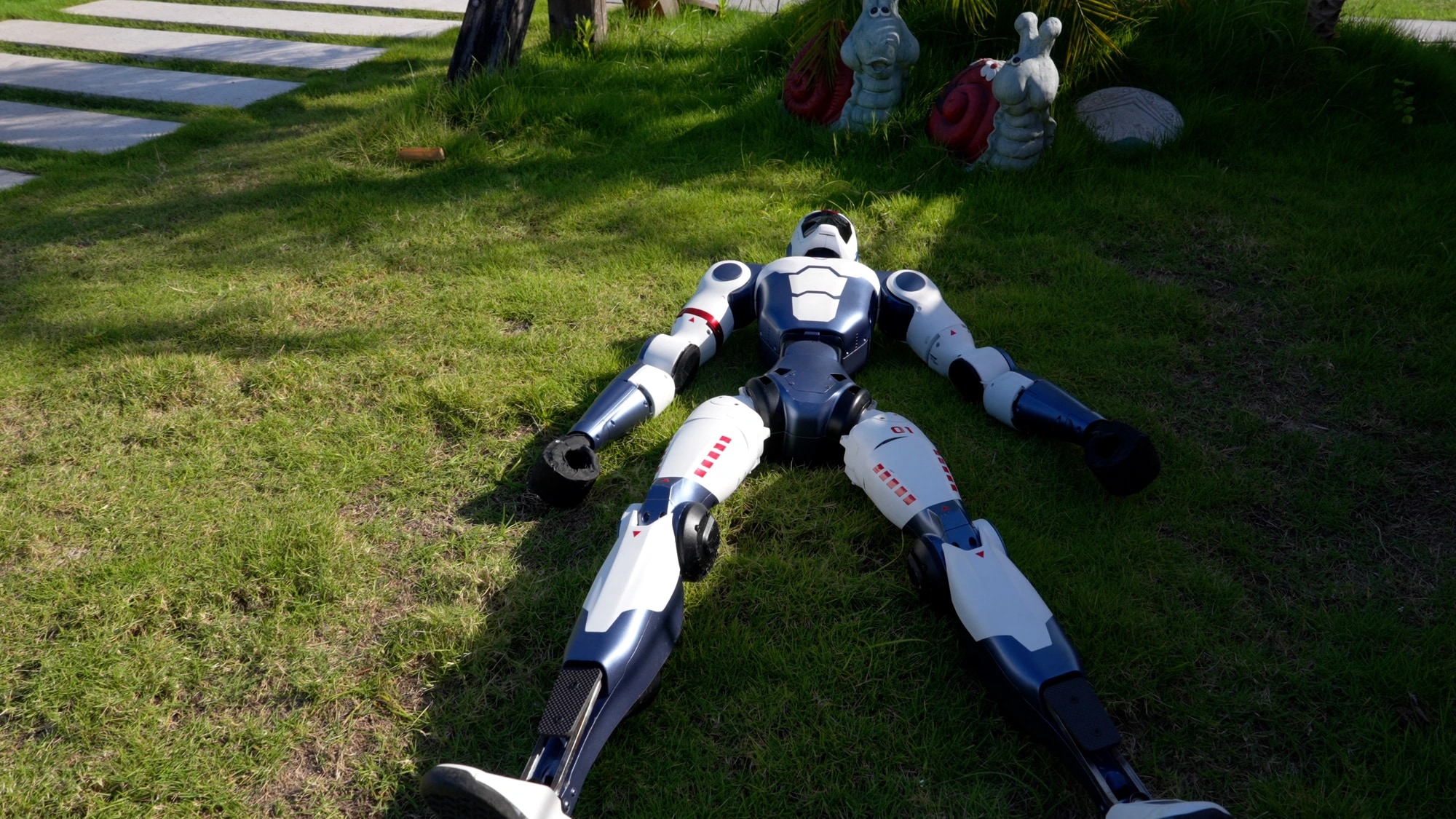
Getting up after a fall
From its back to its feet unaided.
Fast arm motion
Fast upper-body motion on a stable stance.
Simple maintenance
Roughly 27-29 kg, two people lift it.
Running a slope
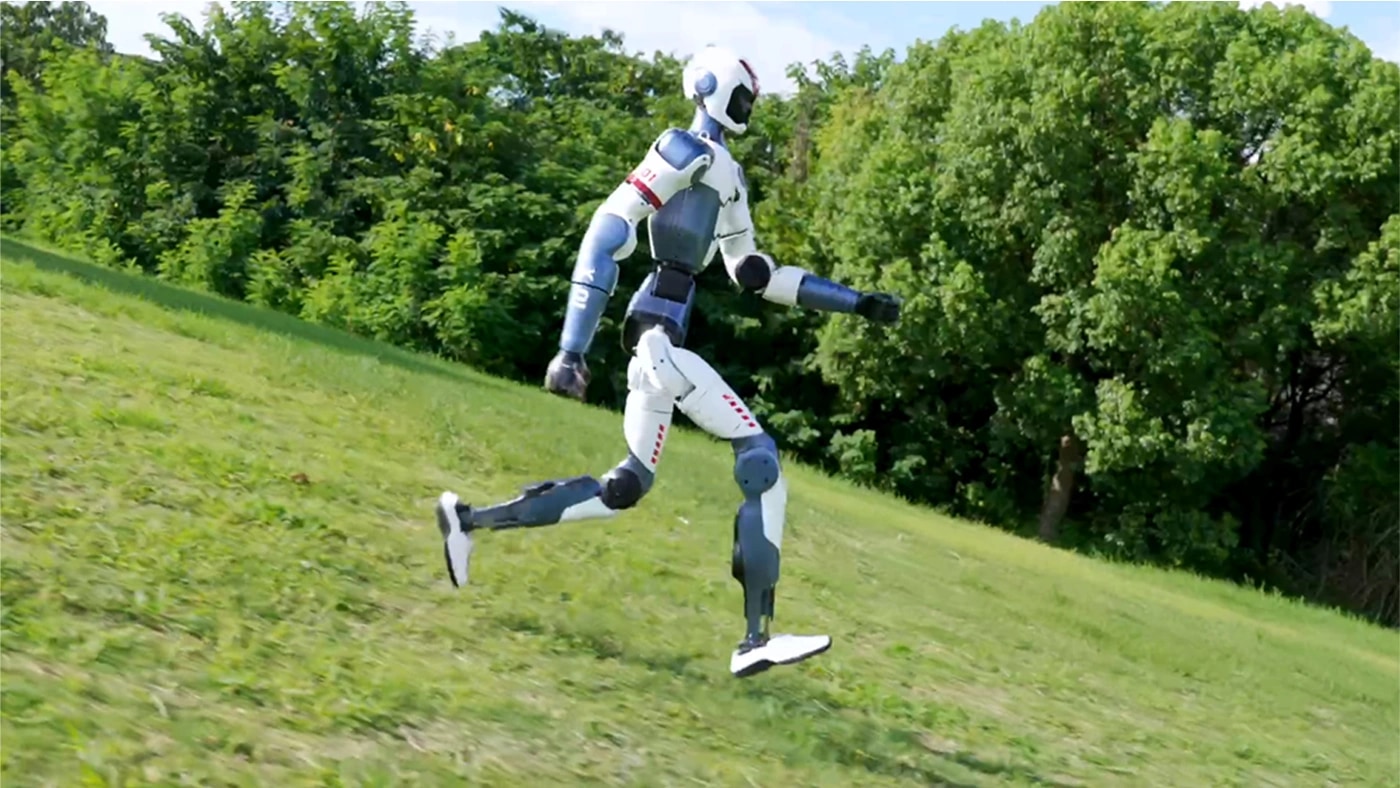
A light build, simple to maintain.